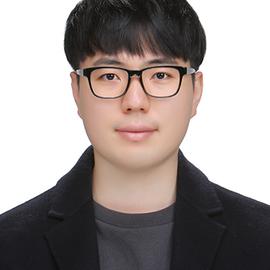
Biography
Insu Yun is an associate professor (untenured) at KAIST, currently leading Hacking Lab. He is interested in system security in general, especially, binary analysis, automatic vulnerability detection, and automatic exploit generation. His work has been published to the major computer conferences such as IEEE Security & Privacy, USENIX Security, and USENIX OSDI. Particularly, his research won the best paper award from USENIX Security and OSDI in 2018, and he also won DARPA AIxCC with Team Atlanta.
In addition to research, he has been participating in several hacking competitions as a hacking expert. In particular, he won Pwn2Own 2020 by compromising Apple Safari and won DEFCON CTF in 2015 and 2018, which is the world hacking competition.
Prior to joining KAIST, he received his Ph.D. degree in Computer Science from Georgia Tech in 2020.
Interests
- Information Security
- Software Security
- Hacking
Education
Ph.D. in Computer Science, 2020
Georgia Institute of Technology
B.S. in Computer Science & Mathematical Science, 2015
KAIST
Recent Publications
Contact
- insuyun@kaist.ac.kr
- 042-350-7469
- Room 812, N1, Korea Advanced Institute of Science and Technology (KAIST), Daejeon, South Korea